Rooted
A visit to Littlejohn Farm in Prince Edward County, Ontario, Canada

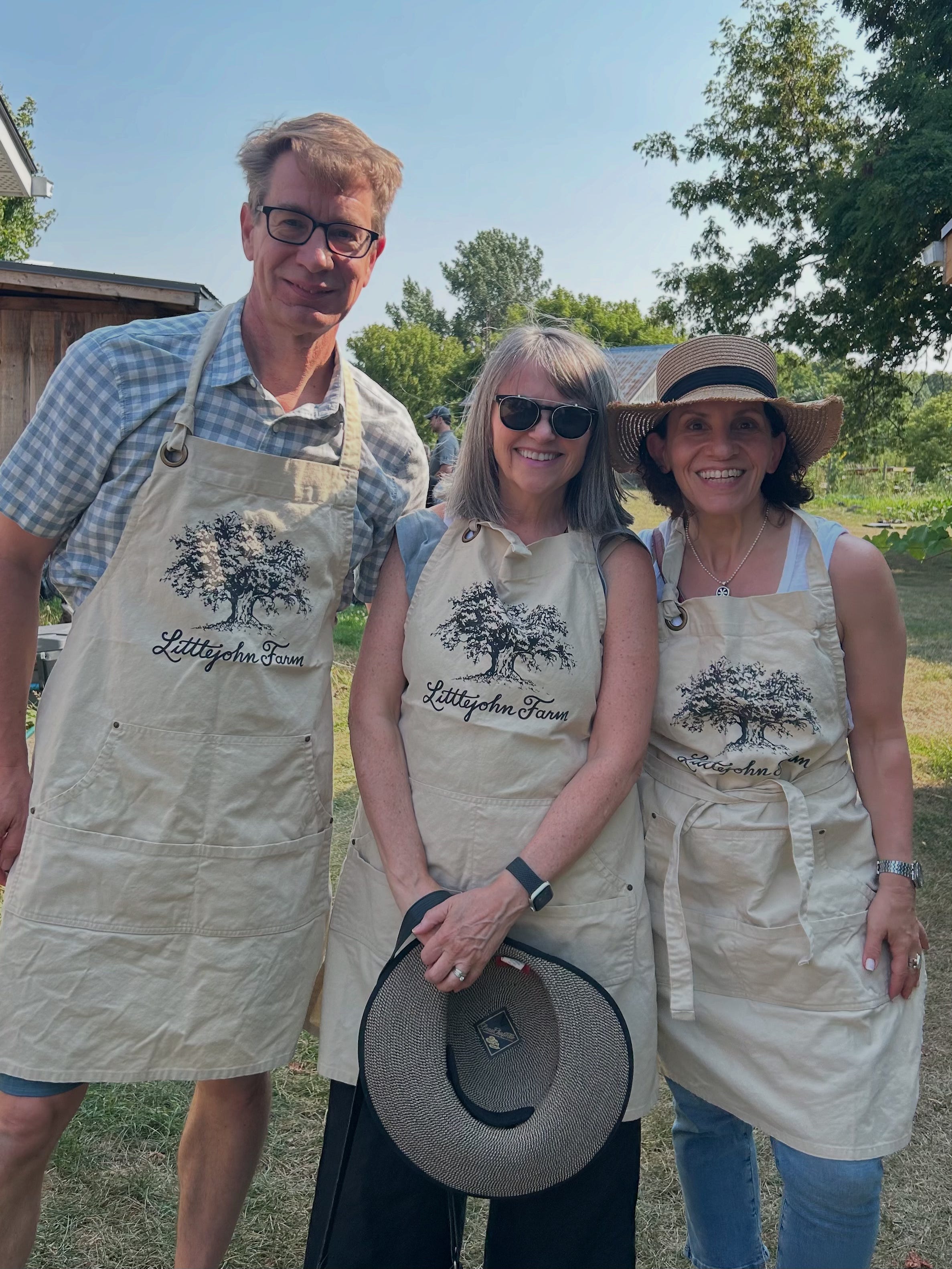
Last year, my former colleague in the entertainment industry (and now dear friend) Carrie Wolfe finally came to visit us here in Prince Edward County - and it only took eight years to find a date that worked! It’s not the first time I have mentioned her in this space - in a previous post, I talk about how she witnessed one of the most embarrassing moments of my film career 😅, but I digress…
Back in the city, Carrie keeps a very full schedule, and has recently added another pursuit to her plate: working towards a nutrition degree through the Institute of Holistic Nutrition (IHN).
Her visit happened to land on a weekend we’d already planned to have dinner at Littlejohn Farm - which turned out to be a happy coincidence. As part of her IHN curriculum, she was required to visit a working farm and file a report with a focus on nutrition and the environment. She loved the experience so much that she came back a few weeks later to spend more time with the Littlejohns, ultimately making their farm and practices the centrepiece of her report.
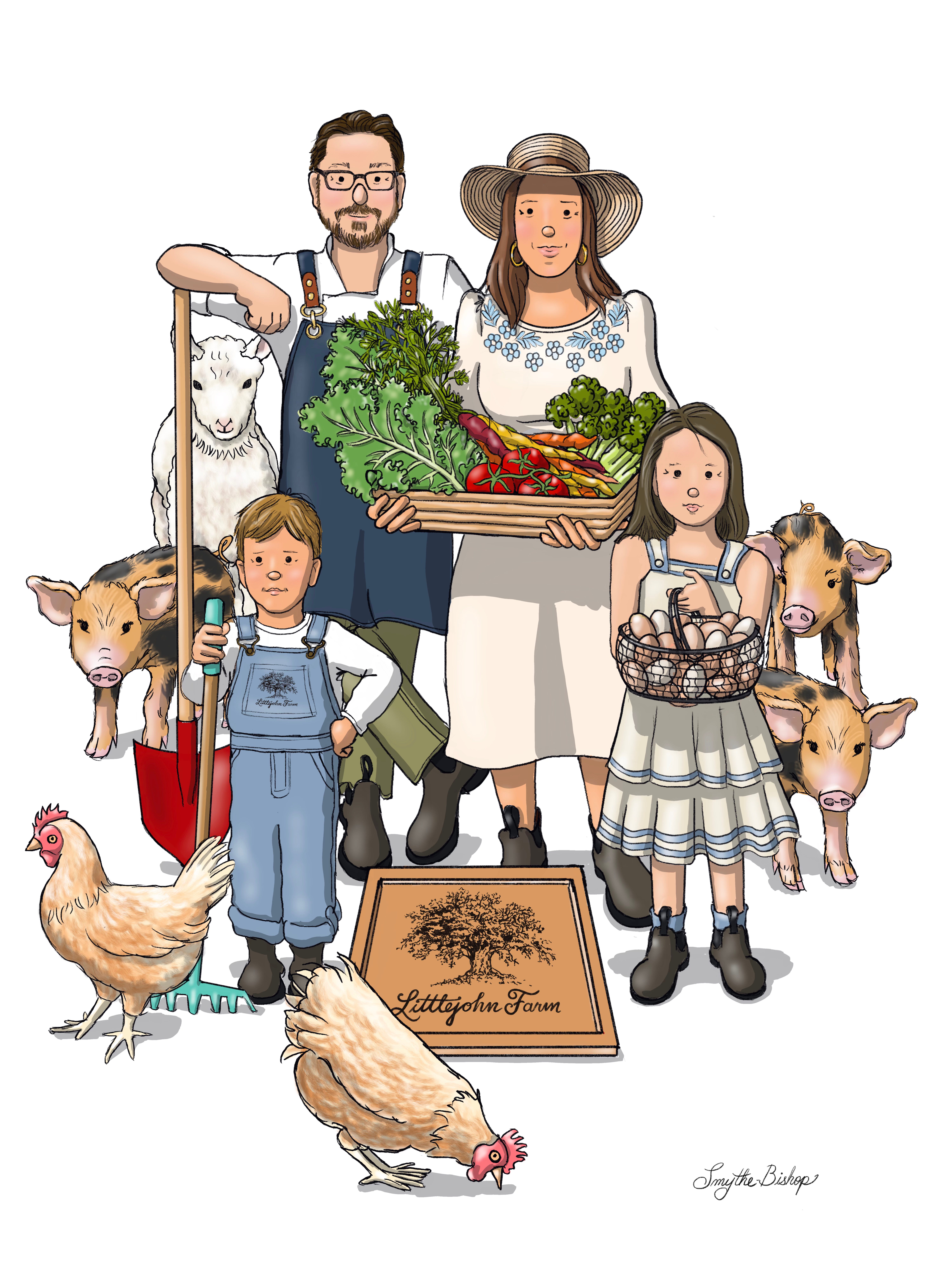
I’ve wanted to write a proper piece on Littlejohn Farm for a while and have mentioned them in posts before, but what Zach and Luhana have built is remarkable - far bigger and more nuanced than anything a social media post can do justice to. They are true leaders in their field (no pun intended!), and after reading Carrie’s report, a collaboration felt like the natural next step: I’d do the illustration, she’d do the writing.
So here it is - a new illustration of this remarkable family (above) and their story below, written by Carrie Wolfe.
I hope you enjoy getting to know, and perhaps learning a little bit more, about this extraordinary family and their business here in Prince Edward County…
Rooted, a Visit to Littlejohn Farm
By Carrie Wolfe
Everything about Littlejohn Farm feels rooted...rooted in family culture, rooted in the land, rooted in a connected local community and rooted in a mission to foster a deep appreciation of food through Agritourism.
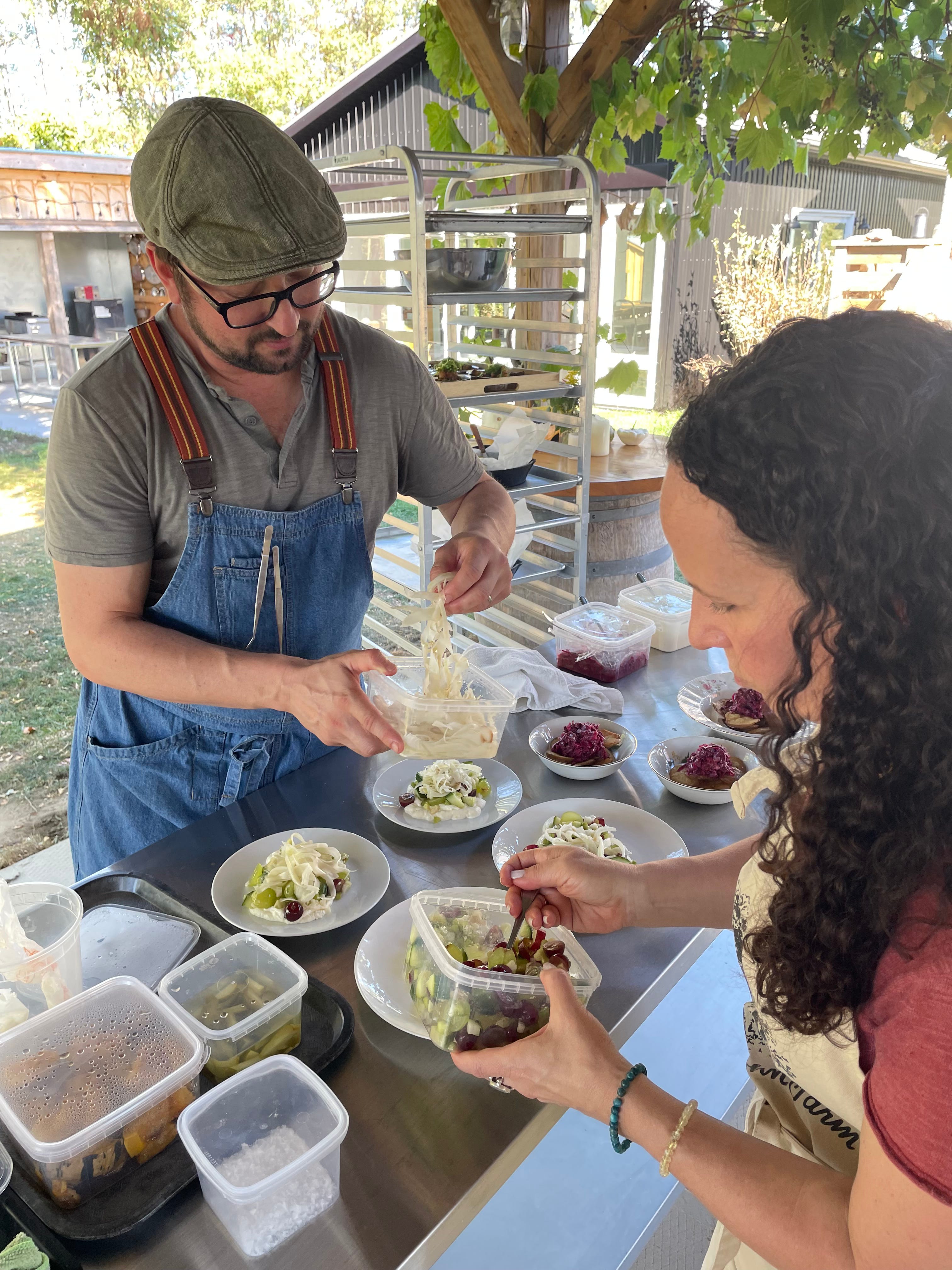
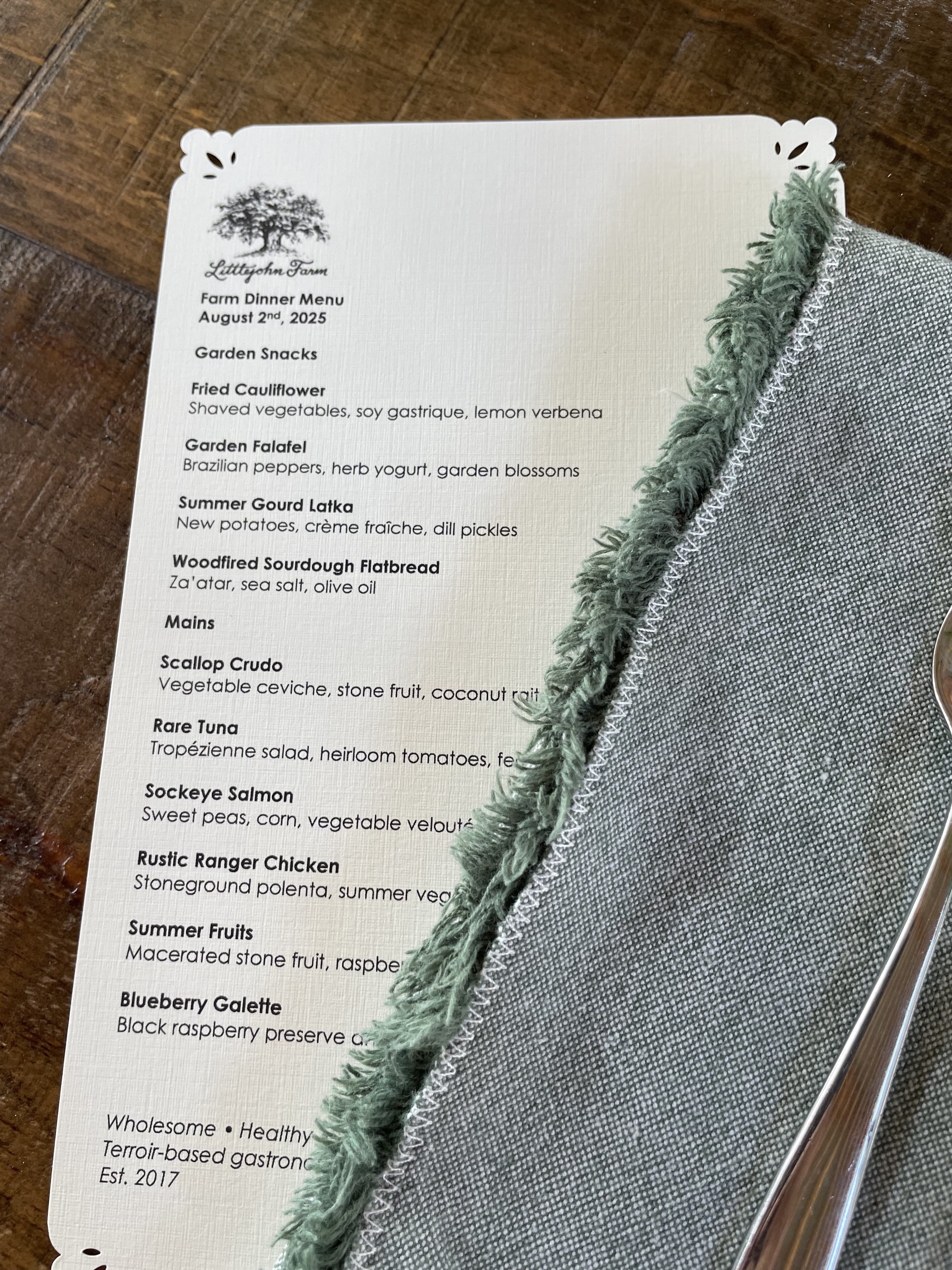
On Oct 5, 2025, the small team at Littlejohn Farm is preparing a ‘European Sunday lunch’ for 16 guests. This relaxed monthly feast is served family style, lasting several hours and served on long harvest tables outdoors. Today’s menu includes seven dishes accompanied by homemade sourdough bread and finished with a warm seasonal apple galette.
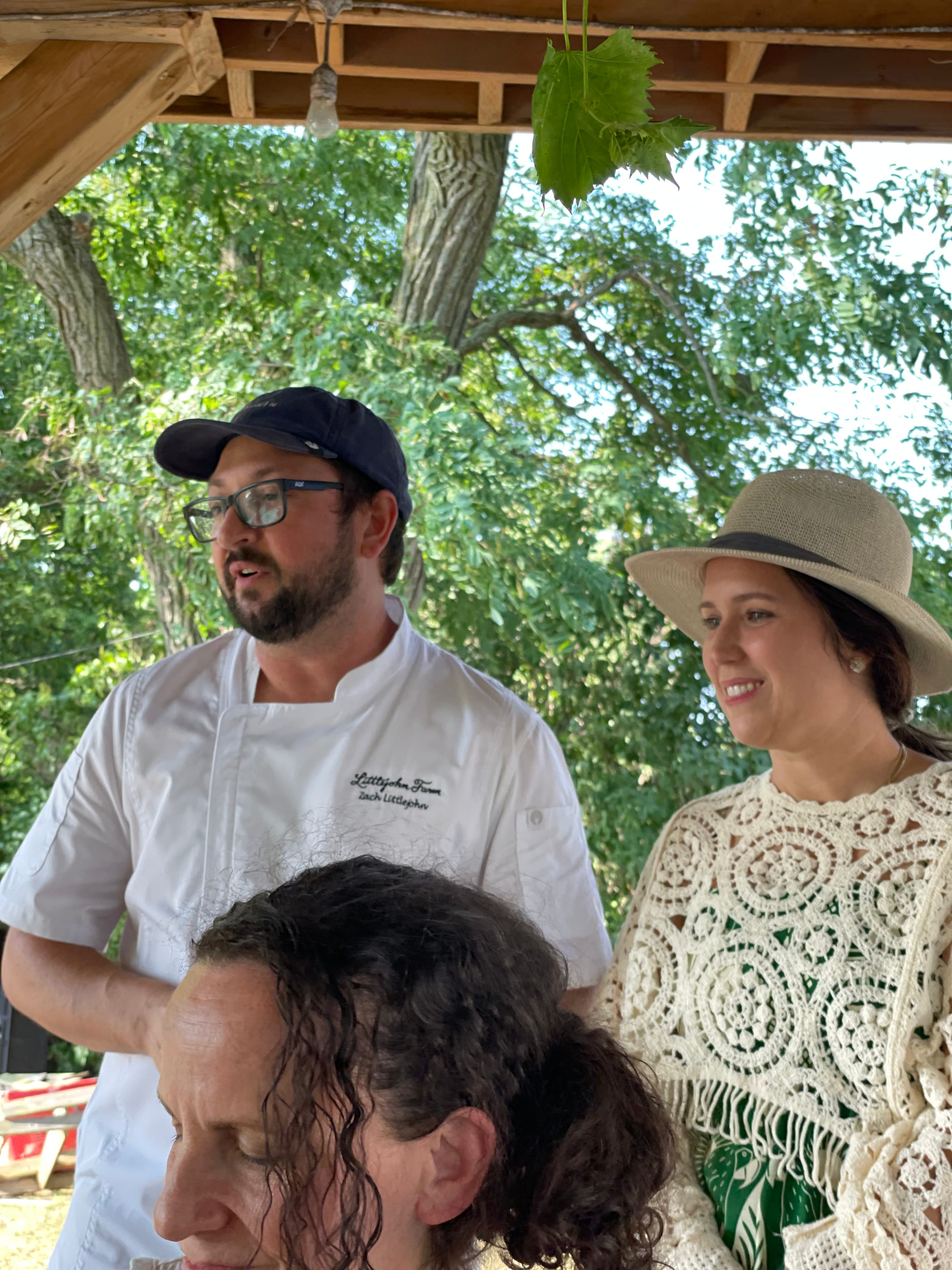
In addition to a farm tour, I had the privilege of helping to prepare the delicious Sunday feast alongside Farmer and Chef Zach Littlejohn.
Rooted in Family Culture
When you visit Littlejohn Farm, the first story you will hear is the farm’s origin. Zach & Luhana Littlejohn met traveling in Europe; a chance meeting at a small train station in southern France - both alone and heading to the border of Spain to start a personal journey walking the famed Camino Trail; that serendipitous meeting would plant the first seeds for what would become Littlejohn Farm.
Zach grew up on a 25-acre farm in Stouffville, Ontario and studied food and wine internationally and across Canada; Luhana hails from Brazil with a background in international relations, economics and business development. By the time Zach and Luhana completed their solo Camino pilgrimage together, the roots of Littlejohn Farm were firmly planted. Both dreamed of building a sustainable community project where they could grow crops, raise a family and share their deep appreciation of land and food.
Rooted in Purpose
In 2017, a sustainable agriculture and culinary experience began as Littlejohn Farm.
“Our goal is to connect people with a deeper understanding of food production and the terroir that it comes from,” explains Luhana. The business almost exclusively utilizes what is grown/raised on the farm; hosting a series of meals and events from spring through fall, welcoming guests including tourists, local community and businesses.
Their agritourism model mixes half agriculture and half tourism/events with a strong emphasis on wholesome, healthy, and sustainable terroir-based gastronomy. The farm’s diverse offerings include farm-to-table dining, corporate events and team-building experiences/workshops which utilize interactive meals along with creative add-ons including candle and soap making.
Rooted in Land
On only 3.5 acres of land in the fertile ground of Prince Edward County, the land at Littlejohn Farm is efficiently maximized to raise select animals and grow an impressive array of fruits and vegetables of the highest 100% organic quality. When it comes to the soil, Littlejohn’s philosophy is to “work with the land and see what it wants to give you.”
Zach and Luhana are field farmers, 90% self-sustained with only select products, such as lemons and oils sourced as needed. Dairy is also acquired but use is very limited on the farm. Garlic, corn, potatoes, squashes, brassicas, lettuces, melons, berries, apples, tomatoes, peppers and Jerusalem artichokes all grow here. They strategically consider the soil and which areas of the farm retain the most moisture and plant accordingly. Plants are rotated within the different lanes – not planting the same thing in the same spot each season. Seeds are sourced locally, reusing and saving whenever possible; there are select providers including a Dutch company with heritage seeds on which Littlefarm Farm relies.
As field farmers, they use no irrigation system, depending mostly on rain and a well system as required. Each year is different and the variance in soil/weather help to create and modify what is grown; this past year for example, with little rain, the sweet corn crop suffered but brassicas soared given a late damp spring and dry summer. Three bee hives provide honey which is pretty much the sole sweetener used in food preparation. This year’s honey, with less rain, has been dense and dark.
Only natural pest control is utilized. On today’s visit, some younger greens are protected with a light screen. Safe from squirrels and rodents, the plants still get light and water can seep right through. Once the plants are strong and large enough that they are no longer of interest to rodents, the screen will be removed.
Nothing is wasted at Littlejohn Farm. All harvested crops are used fresh for events, frozen, preserved and/or sold to local companies when there is excess. An abundant harvest of peppers this year resulted in jars of pepper sauce. Wax from bee hives is used for candle-making at corporate events. Pigs were an early answer to garden waste; as Luhana explains, they are the “best composters” you can get. Extra food gets happily given to the pigs; today several squashes are tossed into their pen.


A commitment to sustainability, quality and efficiency is seen in Littlejohn’s approach to all the animals they raise. Their heritage black pig is bred with a local pink pig; mixing these breeds brings rise to a perfect meat/fat content. The pigs are raised on the farm in a natural large grassy area. As Luhana says, “they have a very happy life except for one day.” On maturity the pigs are taken to a local abattoir. Zach does all the butchering and meat is used and/or frozen. At the end of the season, the mother and 2 females will be kept for breeding.
A coop of hens provides eggs; these hens are known for consistency, laying one egg each day. They roam free, are grass fed and provide characteristic orange yolk eggs. One rooster is kept in the coop to maintain order and avoid a pecking order/fighting among the females.
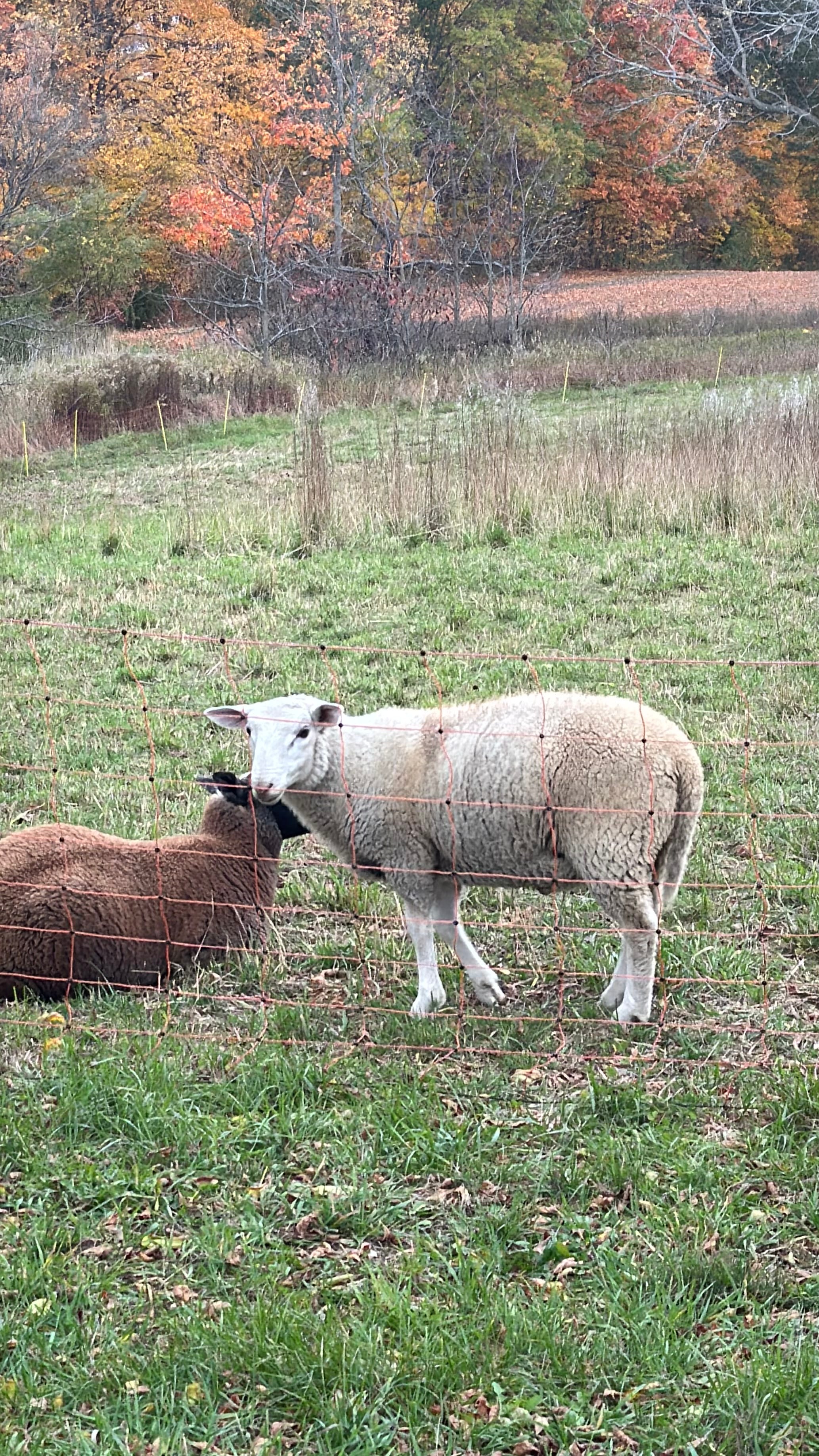
In order to provide a space for lambs to graze and run free, a patch of field is rented from the neighboring farm. The lambs are fed a meal of grains and clovers. A large sheep producer operates in the neighboring community of Waupoos. I learned from Luhana that ewes typically have two offspring and that is the number they are able to properly care for and feed. If they have three or more, the babies are usually ignored and “left for coyote food.” Littlejohn buys only ‘the thirds’; they are bottle-fed and graze freely.
In a separate coop, grass fed ducks, turkeys and chickens roam freely protected by an electric fence. The fenced area is expanded as the grass is eaten by the flock. This strategy allows for a longer than typical growth phase for these meat birds.
Rooted in Community
There’s a strong sense of cooperation among the farmers and businesses in the county. On the day of my visit, the farm is preparing to host the staff party for a local hotel. Partnering with neighbours allows Littlejohn to focus on what they do well and share with others who specialize differently. Extra food is sold to restaurants and traded with neighbours.
After spending time at Littlejohn Farm, you can’t help but feel truly nourished; certainly well fed, but something more than that. It’s the connection.
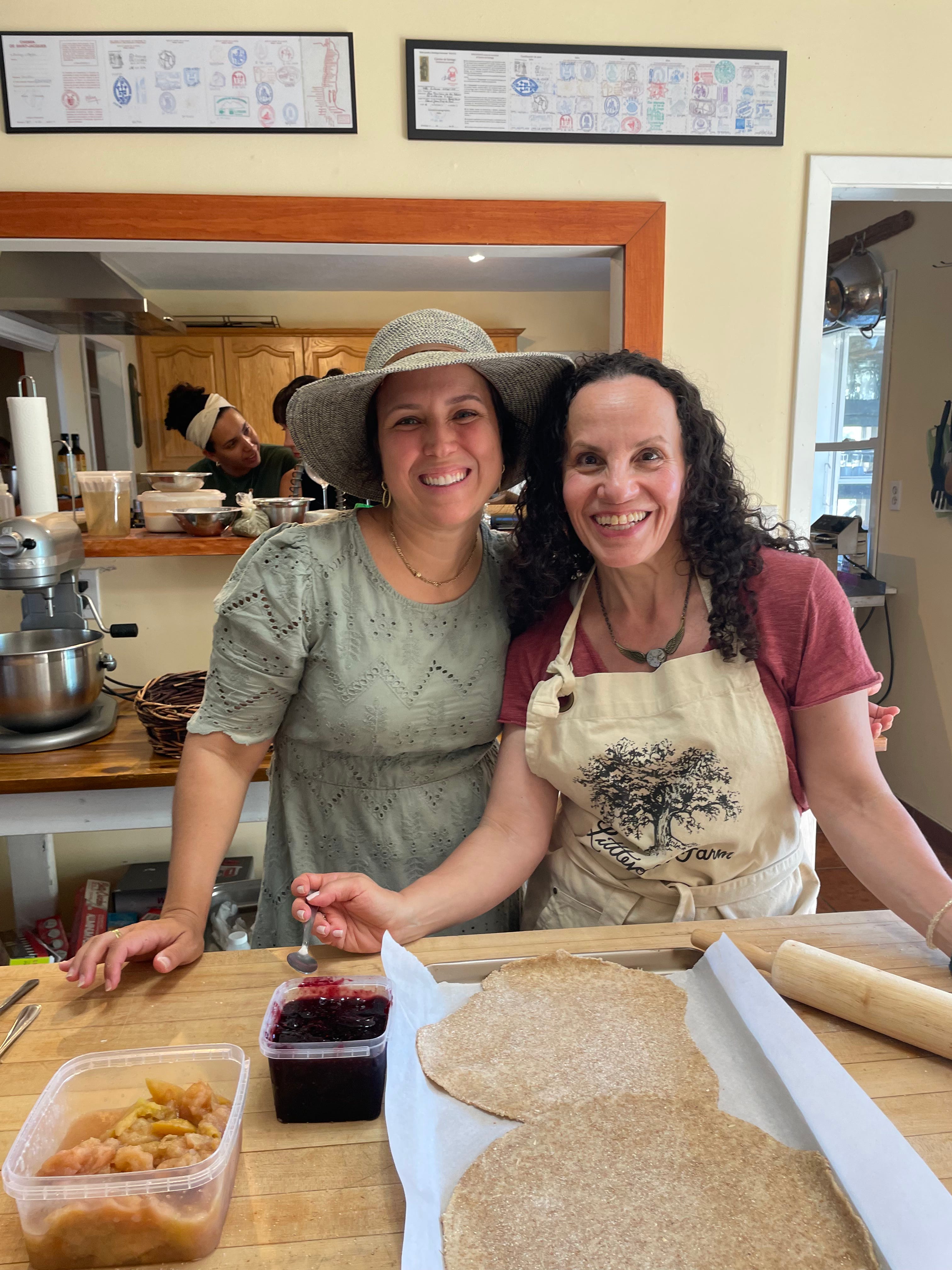
From one neighbour, red fife is sourced, hand ground into flour retaining all full nutrients and used for breads and pastries. For today’s lunch, the dessert – an apple berry galette uses dough made from freshly coarse ground red fife.
A local mushroom grower gives away their used soil for free; rich in nutrients and natural bacteria, this ‘waste’ acts as an effective fertilizer for Littlejohn Farm - completely organic and no cost.
For events, alcohol is not available for purchase on the farm but guests are encouraged to bring their own wine/cider from local county producers.
The Future - Spreading Roots
Zach and Luhana are excited for the future with a goal to fill a complete seasonal calendar with events. A recently finished greenhouse will allow for more efficient early spring growth, more herbs and added space for community events. Packaged food is on the horizon as they continue to invest in education and advocacy.
Before leaving, I ask Zach about recent tariffs, policies and the rising cost of food and groceries. Can a small organic farm survive? His answer is both thoughtful and hopeful. “Canada grows some of the best quality food in the world. I believe in the need for all types of agriculture and for protecting Canada’s farmers and the full system from big industrial operations capable of producing large volume at affordable prices to small independent, specialized farms protecting land and investing in organic regenerative methods. The totality of the spectrum is required for a robust healthy future.” Littlejohn Farm is certainly doing their part.
After spending time at Littlejohn Farm, you can’t help but feel truly nourished; certainly well fed, but something more than that. It’s the connection. From Canada to Brazil and with each person who shares in one of the Littlejohn Farm’s experiences, the roots of community, sustainability and impact spread further. And as it is with each season, those roots grow stronger, more resilient and ever more in tune with the power of nature. That’s what you become a part of and that’s what makes a visit to Littlejohn Farm so special. ❧


For more information on Littlejohn Farm, visit their website HERE.
Or you can follow them on social media through Instagram and Facebook.